
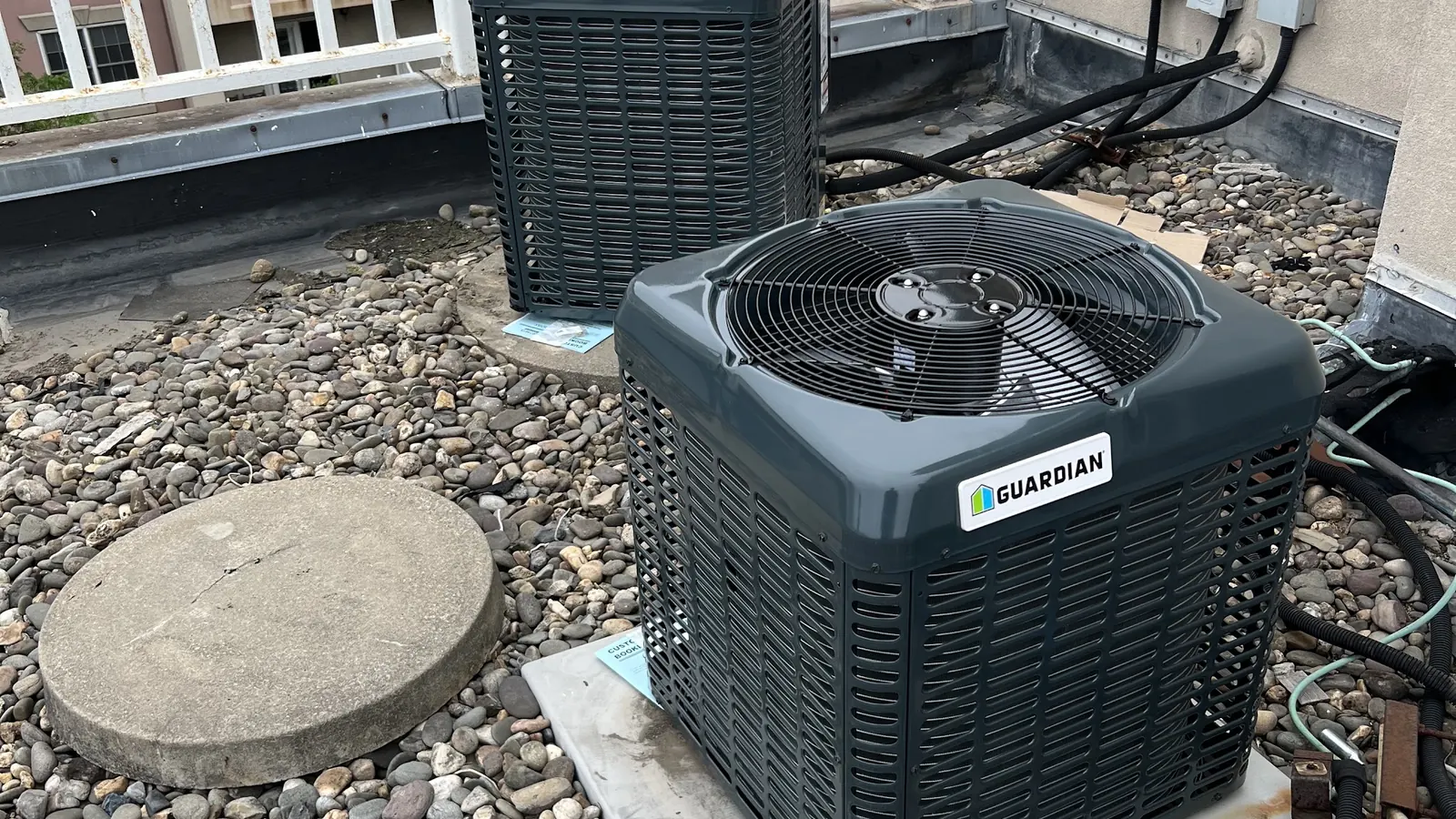
Heights Plumbing, Heating & Cooling locates and repairs refrigerant leaks in central air conditioners, heat pumps and ductless systems throughout Northern New Jersey. Adding refrigerant without finding the leak is a temporary fix that costs you again next season, so we start with the search.
Our technicians are EPA-certified to handle refrigerants and work under NJ HVAC Lic. #197400. You get the diagnosis, the options and the price before we begin, which is what our No Worries Pricing is about.

Low on Refrigerant Again? That Is Not Normal
A sealed cooling system is supposed to hold the same refrigerant charge for its entire life. If a technician topped you off last summer and the system is weak again this summer, refrigerant is escaping somewhere — usually through a corroded evaporator coil, a vibration crack at a line-set joint, a loose service valve, or a rub-through where copper contacts metal.
The practical cost adds up quickly. A low charge makes the compressor work harder and run hotter, which shortens its life. Meanwhile the house does not cool well, humidity stays high, and you are paying for refrigerant that is leaking into the air. Repairing the leak protects the expensive part of the system.
What Our Refrigerant Leak Repair Includes
We start by confirming the system really is low — measuring suction and liquid pressures, superheat and subcooling, and temperature split — because several other faults look like low refrigerant from the thermostat. If the charge is genuinely down, we search for the leak using electronic detectors, UV dye where appropriate, and a nitrogen pressure test on the sections we can isolate.
Once we find it, we explain what it will take to fix. Some leaks are straightforward: a brazed joint, a valve core, a service port cap. Others sit inside an evaporator coil or a buried line set, where replacing the component is the honest answer. After the repair we pull a deep vacuum to remove moisture and air, then weigh in the correct charge to the manufacturer specification rather than guessing by pressure alone.
Signs You Have a Refrigerant Leak
- Cooling got weaker gradually over a season or two
- Ice on the copper line or indoor coil
- A hissing or bubbling sound near the indoor unit
- The system was topped off last year and is low again
- Long run times with poor humidity control
- Oily residue on refrigerant lines or coil fins
- Outdoor unit runs but the house barely cools
- The compressor shuts down on high temperature
Noticing any of these? Call (201) 245-7772 or request service online. Same-day appointments across North Jersey.
Our Refrigerant Leak Repair Process
Verify the charge
We take full pressure and temperature readings to confirm the system is actually low rather than suffering from an airflow or electrical fault.
Locate the leak
Electronic leak detection, UV dye and nitrogen pressure testing narrow it down to the exact joint, coil or line.
Give you the options
We explain whether the leak is repairable in place or whether the coil or line set should be replaced, with a price for each path before you decide.
Repair, evacuate and recharge
We recover the remaining refrigerant properly, make the repair, pull a deep vacuum, and weigh in the exact charge the manufacturer specifies.
Test and document
We run the system, confirm superheat and subcooling are in range, recheck the repair area, and leave you with the readings.
Refrigerant Services We Offer
Electronic leak detection
Calibrated detectors pinpoint escaping refrigerant at coils, joints and valves without tearing the system apart.
Nitrogen pressure testing
Pressurizing an isolated section with dry nitrogen confirms whether it holds, which is the definitive test on slow leaks.
Line set and joint repair
Brazed repairs on accessible copper, valve core and service port replacement, and correcting line sets that have rubbed through.
Coil replacement
When the leak is inside an evaporator or condenser coil, replacement is usually the lasting fix. We handle the coil and the recharge.
Proper recovery and recharge
We recover refrigerant to EPA standards, evacuate to remove moisture, and charge by weight rather than by gauge pressure alone.
Refrigerant transition guidance
The industry is moving from R-410A to lower-global-warming refrigerants. If your system uses an older refrigerant, we explain what that means for repair cost and for replacement timing.
Why Choose Heights for Refrigerant Leak Repair
- Family Owned & Operated: A family business means more personalized service than you get from big chain providers.
- 56 Years of Industry Experience: Over 56 years of combined industry experience across plumbing, heating and cooling.
- Licensed & Insured: NJ HVAC Lic. #197400 and NJ Plumbing Lic. #1221100. Fully insured for residential and commercial work.
- Engineers On Staff: Our own mechanical and electrical engineers design systems and handle wiring, so you don’t need a second contractor.
- Same-Day Service: Schedule with us and we’ll provide service within 24 hours, arriving on time as scheduled.
- No Worries Pricing: Straightforward pricing with no surprise fees or up-charges. You know what you’re paying before we start.
Refrigerant Leak Repair Across Bergen, Essex & North Jersey
We provide refrigerant leak repair from our offices in Fair Lawn and Hillsdale to every municipality in Bergen County and Essex County, including:
We also serve Sussex County, Passaic County, Warren County, Morris County, Hudson County, Union County, Hunterdon County, Somerset County, Middlesex County, Mercer County.
Refrigerant Leak Repair FAQs
Can you just add refrigerant instead of repairing the leak?
We can add refrigerant to get you through a heat wave, but we will be clear that it is temporary. Refrigerant does not get consumed, so a low system has a leak, and it will be low again without a repair.
How do you find a leak you cannot see?
A combination of electronic detection, UV dye circulated with the refrigerant, and isolating sections under nitrogen pressure to see which one loses pressure. Most leaks are found on the first visit.
Is refrigerant dangerous to have leaking in my house?
In the small quantities of a residential leak it is generally not a health hazard in a normally ventilated home, but it is harmful to release into the atmosphere and it is hard on your compressor. It should be repaired.
My system uses R-410A. Is that a problem?
No. R-410A systems are still serviceable and refrigerant is still available. New equipment is transitioning to lower-global-warming refrigerants, which is worth factoring in when you eventually replace the system rather than a reason to replace it now.
Will my homeowner policy or existing warranty cover it?
That depends entirely on your policy and the equipment manufacturer. We document what we find and the parts involved so you have what you need to ask, and we do not make coverage promises on someone else’s behalf.